
The Tools
Four pillars for AI-assisted literature review. Each one shines in a different stage of the workflow. Learn the prompt patterns that turn them from chatbots into research partners.
Claude
The best long-form academic writer of the four — and the only one with first-class Skills: packaged instructions + assets Claude loads on demand for repeatable workflows. For literature review, Skills are a game-changer.
Why Skills matter for lit review
A Skill is a folder with a SKILL.md instruction file plus optional templates, scripts and reference docs. Claude loads it only when the task matches — so you can stockpile dozens of lit-review workflows without polluting every chat. Build it once, run it forever.
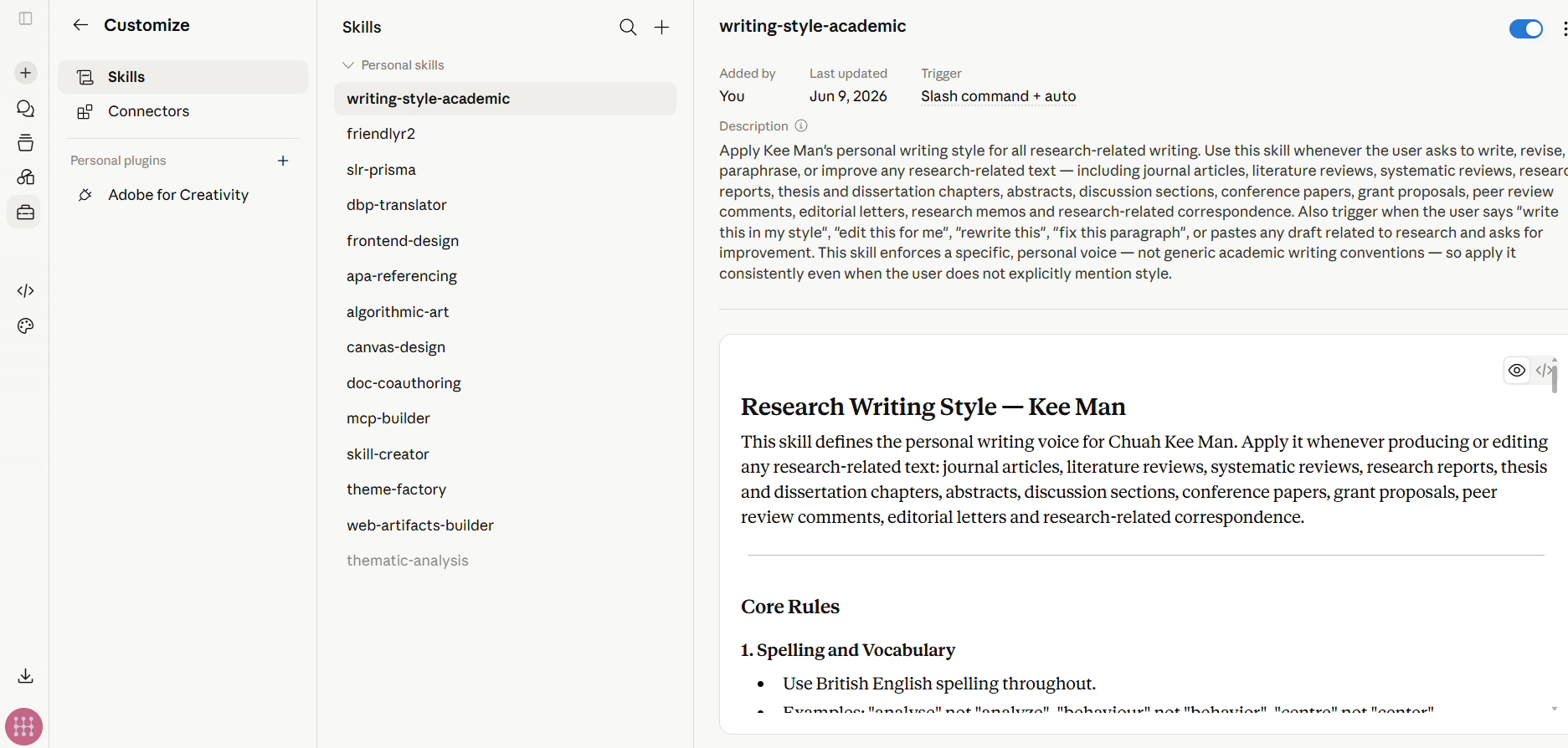
Bundles APA 7 rules and a house style guide so every citation and reference comes out correctly formatted on the first try.
github.com/keemanxp/apa-referencing-skill →
Generates PRISMA-compliant inclusion/exclusion tables and flow diagrams from a list of screened papers.
github.com/keemanxp/slr-prisma →
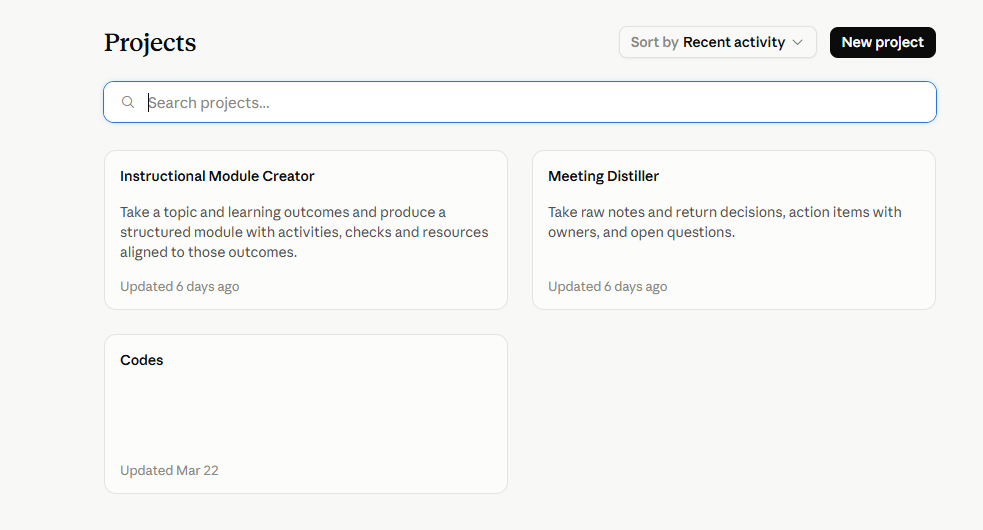
Projects
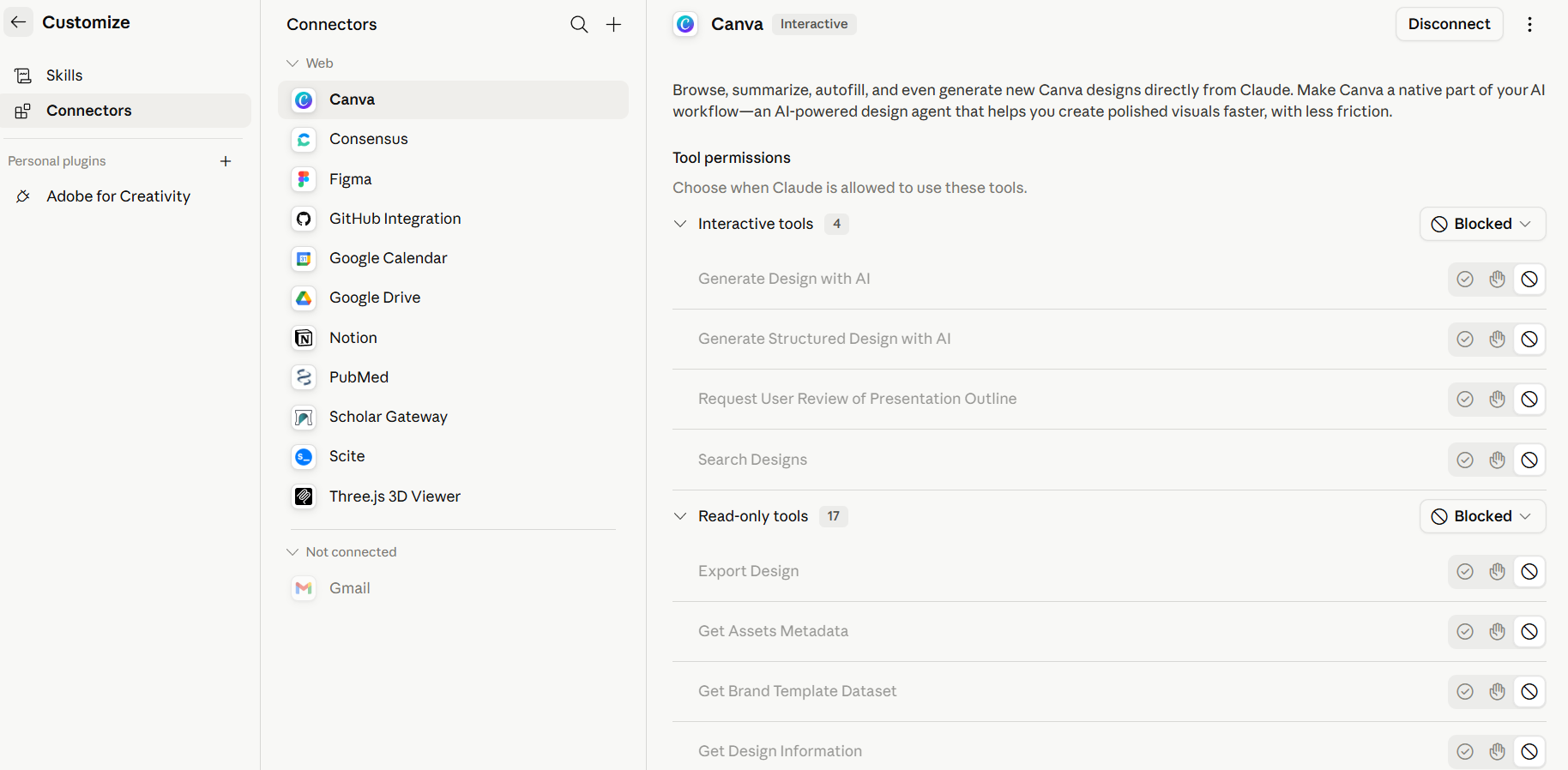
Connectors (Google Drive, Notion, etc.)
When to reach for it
- ✦ Long-form writing — Claude's prose is the most academically appropriate of the four.
- ✦ Repeatable workflows you'll run dozens of times (build a Skill for them).
- ✦ Sensitive corpora — Anthropic's data policies are the most researcher-friendly.
Prompt cards
SKILL.md — APA Synthesis Skill
---
name: apa-lit-synthesis
description: Synthesises a set of academic sources into a coherent APA 7 literature review section, with inline citations and a reference list.
---
When invoked:
1. Confirm the topic and the sources provided.
2. Cluster sources into 3–5 themes.
3. For each theme write 150–200 words: claim → evidence → contradiction → mini-synthesis.
4. Use APA 7 in-text citations (Author, Year).
5. End with a deduplicated APA reference list.
6. Add a "Verification" section noting any claim that may need source checking.
SKILL.md — Gap Analysis Skill
---
name: lit-gap-analysis
description: Identifies methodological, conceptual and contextual gaps across a set of papers and ranks the most promising research opportunities.
---
Procedure:
1. List each source with: method, sample, theory, key finding.
2. Identify gaps under three headings — Methodological, Conceptual, Contextual.
3. For each gap, cite which sources reveal it.
4. Rank the top 3 gaps by (a) feasibility and (b) novelty.
5. Propose one research question per top gap.
Project-level instructions
This Project is my PhD thesis on [TOPIC] in [DISCIPLINE].
Always:
- Write in academic British English.
- Use APA 7 citations and hedged claims.
- Distinguish what the literature says from what I (the author) argue.
- Never invent a citation. If unsure, mark with [VERIFY].
Files in this project include my proposal, outline and supervisor's feedback. Honour them.
Critical synthesis prompt
Read the attached papers. Produce a critical synthesis for my literature review on [SUB-TOPIC].

Structure:
1. Where the field agrees (with evidence).
2. Where the field disagrees (name the camps).
3. What is methodologically weak across the literature.
4. The single most promising direction for new work, with rationale.

End with three "questions I should ask my supervisor" based on tensions you noticed.
Sandwich paragraph drafter
Using the attached sources, draft a 200-word "sandwich" paragraph for my literature review on [SUB-TOPIC]:
- Top slice: my own framing sentence introducing the issue.
- Filling: 3–4 cited claims from the literature (APA 7 in-text), showing agreement and tension.
- Bottom slice: my own synthesising sentence that positions my study within the gap.
After the paragraph, list each citation used and the exact sentence in the source that supports it.
Reviewer-2 stress test
Act as a sceptical Reviewer 2 examining the literature review section I pasted below.
Produce:
1. Three weaknesses in how I've represented the literature (over-claims, missing voices, dated sources).
2. Two papers or bodies of work I should have engaged with (suggest specific authors / lines of inquiry from the attached corpus).
3. One structural change that would make the argument tighter.
Be direct. Quote my own sentences when criticising them.
Source verification & hallucination check
Audit your previous response for fabricated or misattributed sources.
For each citation you produced:
1. Confirm it exists in the files attached to this Project / conversation. If not, mark [NOT IN CORPUS].
2. Quote the exact passage in the source that supports the claim. If you cannot, mark the claim [UNSUPPORTED] and remove it.
3. Check author names, year, title and journal letter-by-letter against the source — flag any mismatch as [MISCITED].
Return a corrected answer with only verified citations, plus a short "Audit log" listing what was removed and why.