
Part 2
The Tools
Four pillars for AI-assisted literature review. Each one shines in a different stage of the workflow. Learn the prompt patterns that turn them from chatbots into research partners.
Conversational discovery
Scholar Labs
Source-grounded synthesis
NotebookLM
Deep Research & long context
Gemini
Custom GPTs & Projects
ChatGPT
Skills & long-form writing
Claude
ChatGPT
The most flexible all-rounder. The trick is to stop using plain chat and start using Projects (persistent context per thesis chapter) and Custom GPTs (reusable, sharable lit-review assistants).
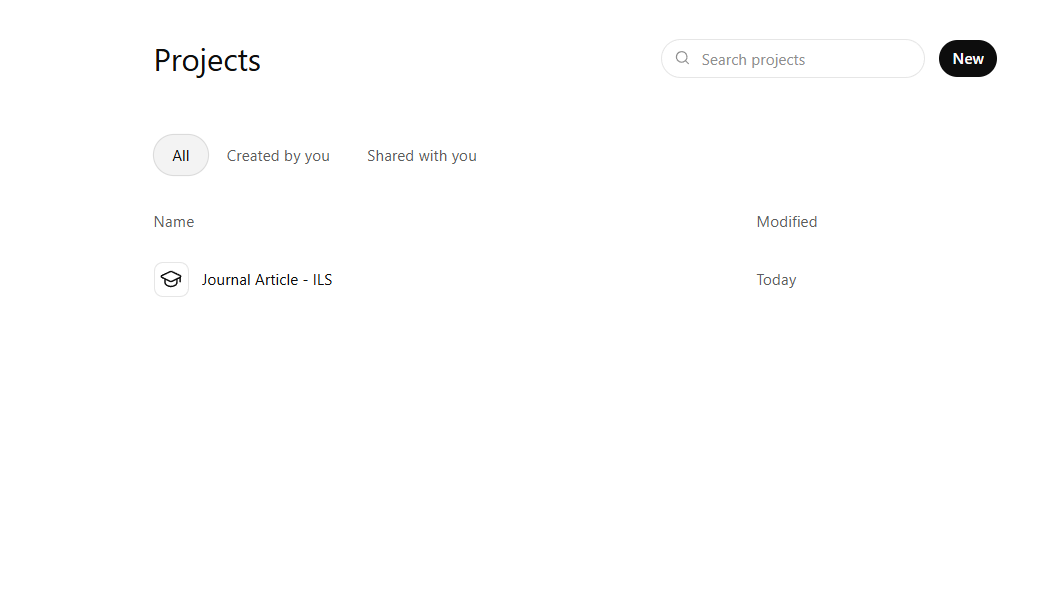
Projects
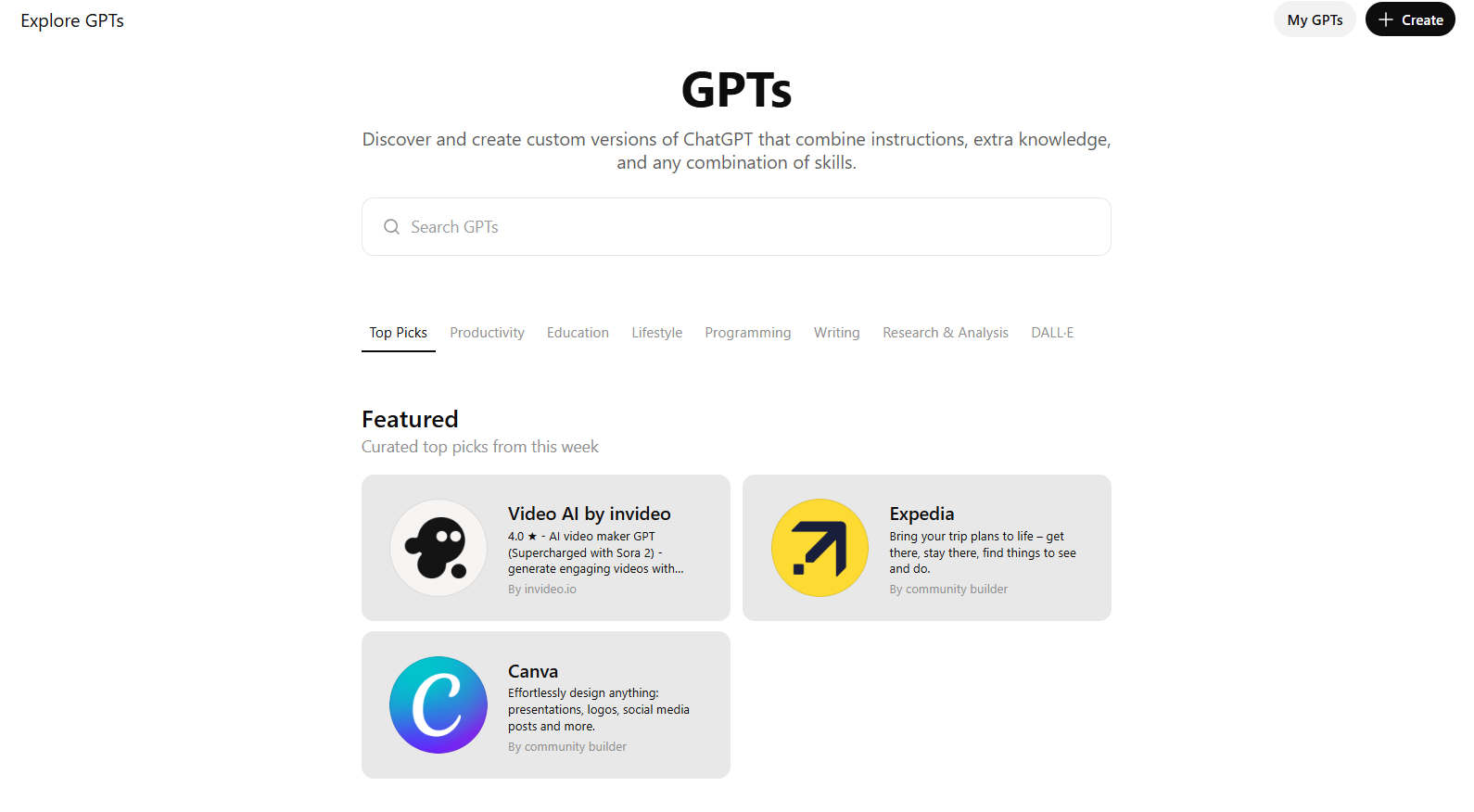
Custom GPTs

Apps
When to reach for it
- ✦ You're writing a long thesis and need persistent context per chapter (Projects).
- ✦ You want to share a reusable lit-review workflow with your team (Custom GPTs).
- ✦ You need quick analysis with Python / web search / canvas in one place.
Prompt cards
Setup
Project instructions (lit-review chapter)
You are my literature review co-author for a PhD chapter on [TOPIC] in [DISCIPLINE].
Conventions:
- Citation style: APA 7.
- Writing voice: third person, hedged, evidence-led.
- Never invent citations. If a source isn't in the uploaded library, say so.
- Always end answers with: "Sources actually used: [list]".
Custom GPT
Custom GPT system prompt
You are LitReviewGPT, an assistant specialised in academic literature synthesis.
Workflow you always follow:
1. Clarify the user's research question.
2. Ask which sources they want to draw from (uploaded files / known papers / open search).
3. Produce a structured synthesis with: themes → evidence per theme → contradictions → gaps.
4. End with 3 follow-up questions the user should consider.
Refuse to fabricate citations. State uncertainty plainly.
Drafting
Paragraph drafter from notes
Using ONLY the notes I provided below, draft a 180-word paragraph for my literature review on [SUB-TOPIC].
Constraints:
- APA in-text citations.
- One topic sentence, evidence, counter-evidence, mini-synthesis.
- No filler. No hedging beyond what the sources support.
Then list any claim in the paragraph that you couldn't fully ground in the notes.
Annotation
Annotated bibliography entry
For the paper I'm pasting, produce an annotated bibliography entry in this format:
[APA reference]
Purpose: (1–2 sentences)
Method: (1 sentence)
Key findings: (3 bullets)
Relevance to my study on [TOPIC]: (2 sentences)
Critical note: (1 honest weakness)
Matrix
Literature matrix builder
From the papers in this Project, build a literature matrix with these columns:
| Author (Year) | Country / Context | Theoretical lens | Method & sample | Key finding | Limitation | Relevance to my RQ |
Only use sources actually uploaded to this Project. After the table, write a 150-word narrative summary identifying the two strongest clusters and one outlier.
Critical
Counter-argument generator
Read my draft paragraph below. Then:
1. Identify the central claim.
2. Steel-man the strongest counter-argument from the existing literature in this Project.
3. Cite the specific sources (APA in-text) that would support that counter-position.
4. Suggest how I could revise the paragraph to acknowledge and address the counter-argument without weakening my thesis.
Verify sources
Citation reality check
For every citation in your previous answer, do the following:
1. Confirm the citation exists by matching it against the Project files / BibTeX library I uploaded. If it isn't there, mark [NOT IN LIBRARY].
2. If you used web search, provide a working URL or DOI for each source. If you cannot, mark [UNVERIFIED].
3. Re-quote the exact sentence from the source that supports each claim. Paraphrases without a verifiable source must be removed.
Return a corrected version of the answer with only verified citations remaining, plus a list of removed claims.